Side-by-side comparison
Institut Lyfe (ex Paul Bocuse) vs ESSEC IMHI
Tuition, outcomes, student body and the AI-impact profile for graduates of each school.
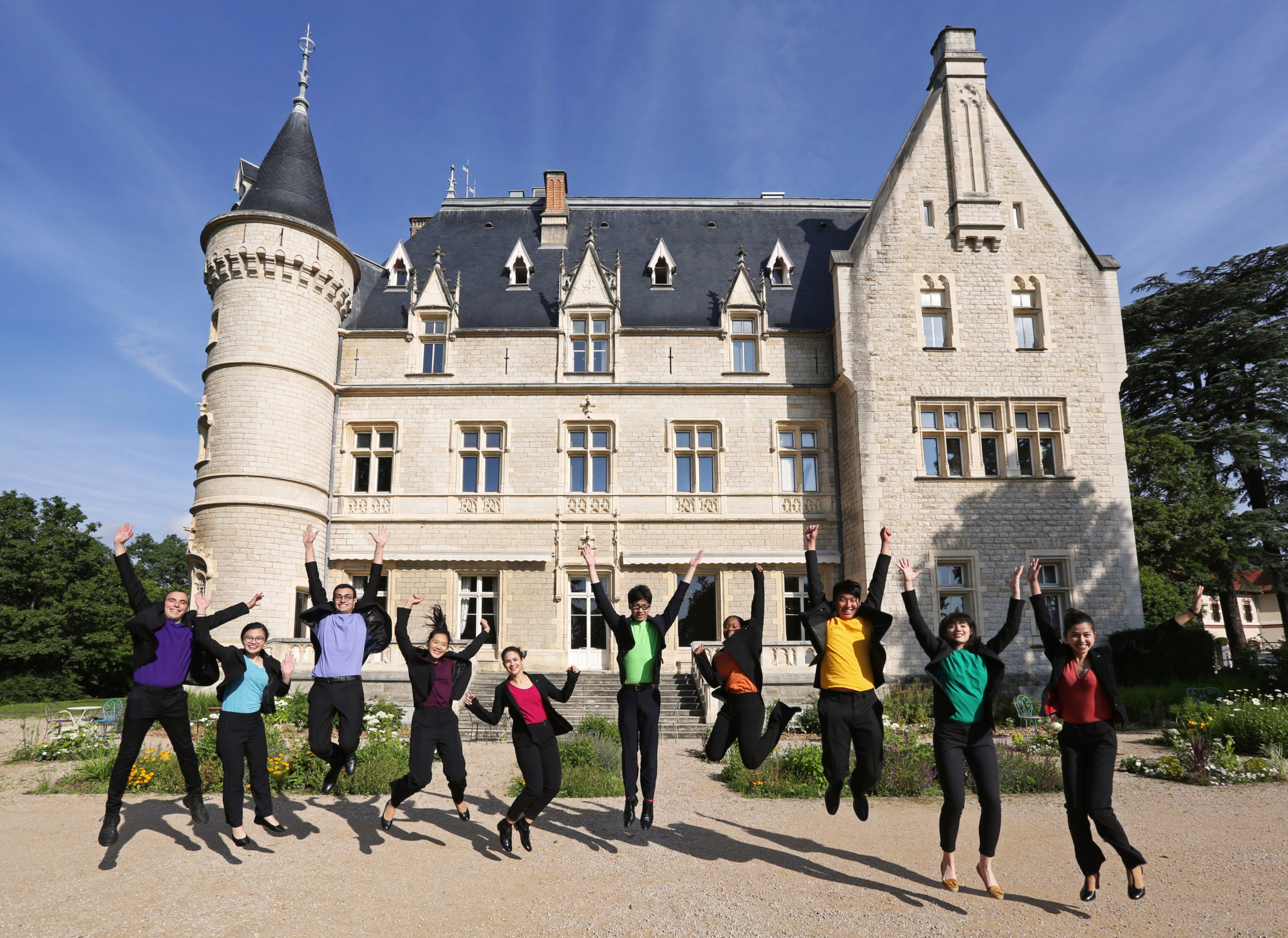
Institut Lyfe (ex Paul Bocuse)
Écully, France
Institut Lyfe: Management in Culinary Arts & Hospitality.

ESSEC IMHI
Cergy, France
Enlighten. Lead. Change. A leading academic institution combining academic rigor and practical expertise to train responsible leaders.
Institut Lyfe (ex Paul Bocuse) vs ESSEC IMHI — what you actually need to know
Both Institut Lyfe (ex Paul Bocuse) (Écully, France) and ESSEC IMHI (Cergy, France) sit among the world's most-searched hospitality programs, and the question of which one to pick gets harder every admission cycle. This guide cuts through the marketing: side-by-side tuition, acceptance rates, ranking, outcomes, programs, student body and AI-readiness, with a clear verdict at the end. Institut Lyfe (ex Paul Bocuse): "Where Bocuse trained the next generation" ESSEC IMHI: "The hospitality MBA, by ESSEC + Cornell"
The verdict in one paragraph
If your priority is global brand prestige and ranking, Institut Lyfe (ex Paul Bocuse) is the safer pick. If you care more about lower total cost, Institut Lyfe (ex Paul Bocuse) comes out ahead. For international exposure, ESSEC IMHI runs a more globally diverse cohort. For selectivity and signalling, ESSEC IMHI is the tougher admit.
Key metrics
Overall profile
The verdict
Across 7 programs at Institut Lyfe (ex Paul Bocuse) and 9 at ESSEC IMHI, the AI-augmentation upside is higher at ESSEC IMHI (83% vs 81%). Projected year-5 salary premium for AI-fluent grads: Institut Lyfe (ex Paul Bocuse) +22% vs ESSEC IMHI +24%.
Institut Lyfe (ex Paul Bocuse)
90/100
AI opportunity
ESSEC IMHI
92/100
AI opportunity
AI impact — head-to-head
Full comparison
| Institut Lyfe (ex Paul Bocuse) | ESSEC IMHI | |
|---|---|---|
| Location | Écully, France | Cergy, France |
| Founded | 1990 | 1907 |
| Type | Private | Private business school |
| Global hospitality rank | #5 | #6 |
| Tuition (mid) | $22,000 | $40,000 |
| Acceptance rate | 30% | 25% |
| Students | 1,200 | 700 |
| International % | 55% | 80% |
| Programs offered | 7 | 9 |
| AI augmentation | 81% | 83% |
| AI automation risk | 31% | 29% |
| Yr-5 salary delta | +22% | +24% |
Bold values indicate the more favourable side on each row (lower tuition, lower acceptance rate, higher rank, more international, higher AI augmentation).
Cost & financial commitment
Tuition at Institut Lyfe (ex Paul Bocuse) runs roughly $16,000–$28,000 per year, while ESSEC IMHI sits around $32,000–$48,000. On the mid-point, Institut Lyfe (ex Paul Bocuse) is 82% cheaper than ESSEC IMHI.
Beyond tuition, budget for cost-of-living differences: housing in Écully typically runs $1,000–$2,500/mo, and in Cergy $900–$2,400/mo. Expect another $15–25k/year in living costs at either school. Paid internships at both programs offset a portion of this.
- ROI math
- at a $22,000 average tuition vs a $40,000 alternative, the 4-year cost gap is ~$72,000. Hotel-group fast-track salaries typically close that gap within 18–30 months; consulting and asset-management exits can do it in under a year.
Outcomes & graduate destinations
Institut Lyfe (ex Paul Bocuse) graduates feed primarily into LVMH, Accor, Michelin-grade restaurants and Pernod Ricard — average starting salary in the $55–75k range, with five-year medians of $85–110k operational and $130k+ for asset-management, consulting or own-venture exits.
ESSEC IMHI grads skew toward luxury maisons, fine dining and Michelin-grade kitchens. Salary band is similar, but post-graduate premium is meaningfully higher at Institut Lyfe (ex Paul Bocuse) thanks to ranking and alumni network density.
Placement: both publish 90%+ paid-internship placement and 85%+ graduation-month employment.
Curriculum & teaching style
Institut Lyfe (ex Paul Bocuse) runs an industry-embedded, practitioner-led curriculum typical of France. Expect operational rotations (front office, F&B, rooms, kitchen) in years 1–2, then business-school style modules (revenue management, finance, marketing, strategy, sustainability, digital) in years 3–4. Capstones are usually live consulting projects with hotel groups.
ESSEC IMHI leans more academic and research-driven, with optional industry tracks. Class size, language of instruction (mostly English at both), and internship rhythm are the practical day-to-day differences.
Student life, location & community
Écully, France is a French city with the cultural depth and food scene that implies.
Cergy, France delivers a French gastronomic and cultural backdrop.
International student share: Institut Lyfe (ex Paul Bocuse) ~55% vs ESSEC IMHI ~80%. Cohort size: ~700 vs ~700.
Admissions & selectivity
Institut Lyfe (ex Paul Bocuse) reports a ~30% acceptance rate — applicants typically need strong English (IELTS 6.5+/TOEFL 90+), an upper-second class or 3.3+ GPA, a motivational essay, and increasingly some prior hospitality or service-industry exposure. ESSEC IMHI is ~25%; profile is broadly comparable, with interviews increasingly common.
Application timing: both run rolling admissions for autumn intake (deadlines March–May), with smaller spring intakes available. ESSEC IMHI is the harder admit on the headline number.
AI impact on graduates from each school
Hospitality is squarely in the augmentation lane of the AI transition: revenue management, dynamic pricing, guest personalisation, demand forecasting and back-office operations are being rebuilt around models. Front-of-house, F&B craft, leadership and brand-side roles are far less exposed.
Institut Lyfe (ex Paul Bocuse) programs that touch revenue management, marketing, real-estate finance and operations should see graduates' productivity rise materially with AI fluency — a +10–18% year-5 salary premium for grads who master the tooling early is realistic. Pure operational roles see less salary movement but faster promotion velocity.
ESSEC IMHI has a similar profile; the school with deeper data / analytics / digital modules embedded in its core MSc and MBA will hand graduates a bigger lever. Look closely at each school's current AI / data courses before deciding — both are updating curricula aggressively in 2026.
Institut Lyfe (ex Paul Bocuse)
Strengths
- Higher hospitality ranking (#5)
- Lower tuition (mid ~$22,000)
- France base — strong regional placement
- Tight, focused student community
- Founded 1990 — established institution
Trade-offs
- Total cost still a meaningful commitment
- Brand sometimes outpaces specific programs
- Living costs add ~$15–25k/yr
ESSEC IMHI
Strengths
- Established #6 brand
- Tuition in the $40,000 range
- France base — strong regional placement
- More internationally diverse cohort
- Founded 1981 — established institution
Trade-offs
- Higher tuition than Institut Lyfe (ex Paul Bocuse)
- Tough acceptance rate (~25%)
- Living costs add ~$15–25k/yr
Pick Institut Lyfe (ex Paul Bocuse) if…
- You want the higher-ranked diploma and are willing to pay for it.
- You prefer France as a base for the next 3–4 years.
- You're drawn to where bocuse trained the next generation.
- Your end-goal is a role in French / European luxury and gastronomy.
Pick ESSEC IMHI if…
- You want a strong, focused program with a clear identity.
- France fits your lifestyle and post-grad work plans.
- You connect with the hospitality mba, by essec + cornell.
- You're optimising for fit over price.
Frequently asked questions
›Is Institut Lyfe (ex Paul Bocuse) better than ESSEC IMHI?
Neither is universally "better". Institut Lyfe (ex Paul Bocuse) ranks #5 and ESSEC IMHI ranks #6 in hospitality. The right choice depends on country fit, budget, program focus and the alumni network that matches your target employers.
›How much does Institut Lyfe (ex Paul Bocuse) cost vs ESSEC IMHI?
Institut Lyfe (ex Paul Bocuse) runs roughly $16,000–$28,000 per year, while ESSEC IMHI sits at $32,000–$48,000. Plan another $15–25k/year for living costs at either.
›Which is harder to get into?
ESSEC IMHI is the more selective admit (~25% vs ~30%).
›What about job placement?
Both publish 85%+ graduation-month employment and 90%+ paid-internship placement. Outcomes diverge most by region — Institut Lyfe (ex Paul Bocuse) dominates France hospitality hiring, ESSEC IMHI dominates France.
›How does AI change the calculus?
Hospitality is an AI-augmented field, not an AI-replaced one. Graduates of either school who learn revenue-management, demand-forecasting and personalisation tooling can expect roughly a 10–18% salary premium by year five.
›Can I transfer between them?
Limited credit transfer at the bachelor level via prior-learning assessments. Master's transfers are rare — both schools want their full curriculum on the transcript.
Get matched
Still undecided?
Tell us your goals — we'll recommend which of these (or another) fits.