Diploma · 🇨🇭 Switzerland
Diploma in Culinary Arts in Switzerland
Compare 6 diploma programmes in culinary arts across Switzerland. Tuition, duration and rankings, side by side.
- Ranked hospitality schools
- 8
- Average tuition
- $36,500
- International students
- 91%
- Graduate employment
- 92%
Key takeaways
- Switzerland is the birthplace of formal hospitality education (EHL, 1893) and still hosts six of the world's top-ten hospitality schools.
- Budget CHF 55,000–75,000 per year including tuition, residence, food and insurance — the highest cost in Europe, offset by the highest post-graduation salaries.
- Every BSc includes a paid 4–6-month internship at a partner hotel — usually a five-star property in Switzerland, the GCC, or Southeast Asia.
- 92% of graduates receive a job offer within six months, and 89% receive three or more offers before starting.
- Non-EU graduates get a six-month visa extension and can convert to a B-permit for senior roles under cantonal quotas.
Industry snapshot · Switzerland
Hospitality is Switzerland's fourth-largest export sector, generating CHF 20.4 billion in 2024 (Swiss Federal Statistical Office). The industry employs roughly 260,000 people — 5.6% of the national workforce — and welcomed 41.8 million overnight stays in 2024, a post-pandemic record.
Three structural forces make the market unusually stable:
- Ultra-luxury concentration. Switzerland has more five-star rooms per capita than any country except Monaco. The Bürgenstock, Beau-Rivage Palace, Badrutt's Palace and Grand Resort Bad Ragaz are training grounds for future GMs.
- Year-round demand. Alpine winters, lakeside summers and Geneva/Zurich business travel keep occupancy above 65% year-round, versus a European average of 58%.
- MICE + private banking spillover. Davos, WEF, Art Basel and the Geneva watch fairs anchor a corporate-events economy that is, per room, the most profitable in Europe.
Schools offering Diploma in Culinary Arts · Switzerland
6 accredited institutions teach this pathway in Switzerland. Ranked by hospitality reputation, with tuition, location and heritage side by side.
Culinary Arts Academy Switzerland
Swiss precision + paid internships across Michelin kitchens and Nestlé.

SHMS Swiss Hotel Management School
Live & Learn Hospitality in Iconic Swiss Palaces. Advance your hospitality career with hands-on education embracing digital transformation.

César Ritz Colleges Switzerland
Learn to Lead. Lead to Succeed. Accredited programs coupled with internships to propel you to a C-Suite position.

Hotel Institute Montreux (HIM)
Swiss craft, American business mind
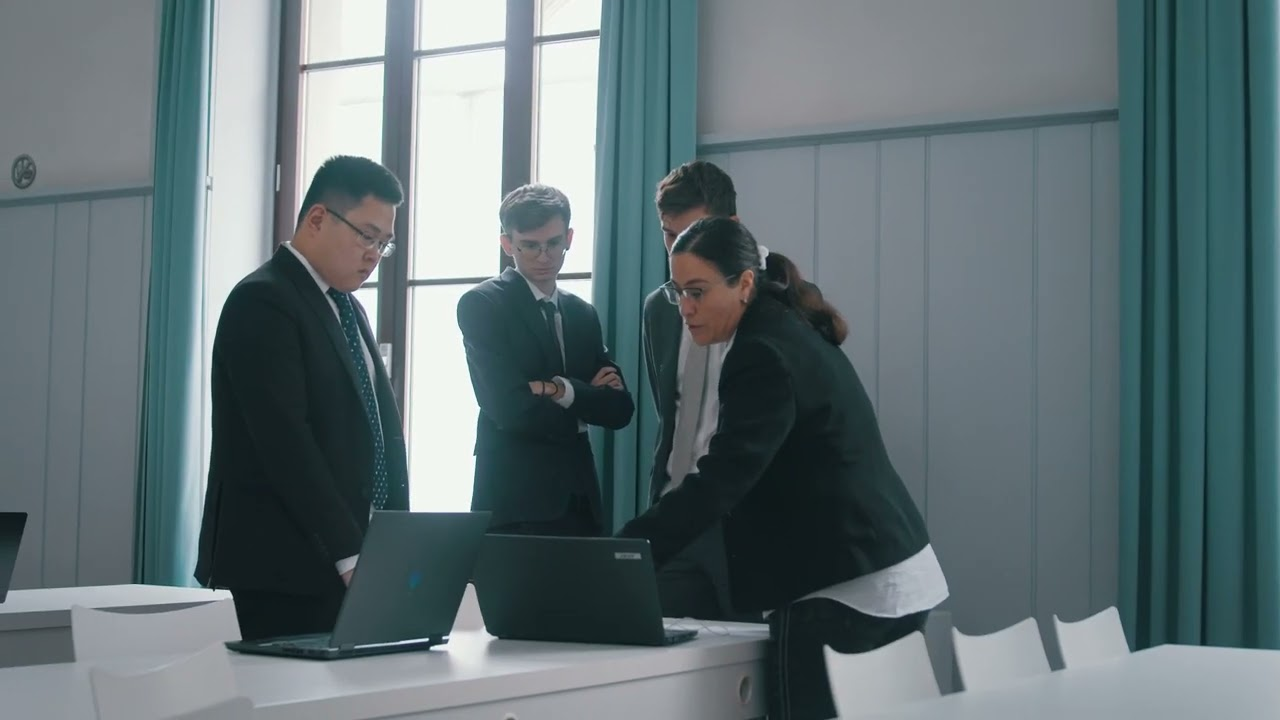

BHMS Business & Hotel Management School
A leading university in the heart of Switzerland with fast-track degrees in business, hospitality, and culinary arts.

IHTTI School of Hotel Management
Where hospitality meets design
Country intelligence
Studying culinary arts in Switzerland 🇨🇭
Switzerland hosts 15 hospitality-focused institutions across 5 cities, with 6 of them running a diploma in culinary arts. Full-programme tuition typically lands between $29k and $145k, depending on campus, internship structure and length of stay.
Graduates enter a market where Switzerland's hospitality sector is being reshaped by rising demand for experiential luxury, a return of long-haul travel, and the fast professionalisation of wellness, F&B and branded residences. Recruiters here weight paid internships, second-language ability and international placements as heavily as academic transcripts — which is why the diploma programmes listed below all embed at least one operational rotation.
Diploma programmes in Culinary Arts
Grand Diplôme in Culinary Arts
BHMS Business & Hotel Management School — Lucerne
Duration
9 months
Tuition
$28,000
Language
—
Level
Diploma
Grand Diplôme in Culinary Arts
Hotel Institute Montreux (HIM) — Montreux
Duration
9 months
Tuition
$35,000
Language
—
Level
Diploma
Grand Diplôme in Culinary Arts
IHTTI School of Hotel Management — Neuchâtel
Duration
9 months
Tuition
$36,000
Language
—
Level
Diploma
Grand Diplôme in Culinary Arts
César Ritz Colleges Switzerland — Le Bouveret & Brig
Duration
9 months
Tuition
$37,000
Language
—
Level
Diploma
Grand Diplôme in Culinary Arts
SHMS Swiss Hotel Management School — Caux & Leysin
Duration
9 months
Tuition
$38,000
Language
—
Level
Diploma
Swiss Grand Diploma in Culinary Arts
Culinary Arts Academy Switzerland — Le Bouveret / Lucerne
Duration
24 months
Tuition
$95,000
Language
—
Level
Diploma
Total annual cost · Switzerland
Tuition is only part of the bill. Below is the realistic year-one budget for a diploma student in Switzerland, including housing, food, transport, insurance and visa fees.
A realistic annual budget for a hospitality student in Vaud (Lausanne/Glion) or Valais (Crans-Montana/Zermatt) is CHF 55,000–75,000 all-in, of which roughly 60% is tuition and 40% is living. Living costs drop 15–20% at Ticino schools (SSTH, BHMS) and rise 10% for schools bundling meals and residence on campus (EHL, Les Roches).
Full-catering campuses (EHL, Les Roches, Glion) roll room, board and uniforms into a single residential fee of CHF 15,000–20,000/year — expensive on paper but usually cheaper than renting privately in Lausanne or Montreux.
| Item | Amount / year | Note |
|---|---|---|
| Tuition (BSc, per year) | $32,000 – $46,000 | EHL sits at the top; SHMS/BHMS at the low end |
| Residential fee (room + board) | $15,000 – $20,000 | Bundled on residential campuses |
| Rent (off-campus, shared flat) | $9,600 – $18,000 | Montreux < Lausanne < Geneva |
| Groceries & meals | $6,000 – $9,000 | Cook at home to stay in range |
| Health insurance | $3,600 – $5,400 | Mandatory; students under 26 get cheaper student tariffs |
| Public transport | $800 – $1,600 | Half-fare card + regional pass |
| Uniforms & books | $1,500 – $2,500 | One-time in year 1, then top-ups |
Admission reality
What the diplomas listed above look for on average. Individual schools vary — always check the school page for the exact bar.
Most Swiss hospitality schools accept rolling admissions with three intakes: September (main), February and, at Les Roches and Glion, July. The typical file includes:
- Secondary-school diploma (or equivalent — Baccalauréat, A-Levels, IB, High-School Diploma)
- English proficiency: IELTS 6.0, TOEFL iBT 80, or Duolingo 105+ (EHL requires IELTS 6.5)
- Personal statement (500–800 words) explaining your motivation for hospitality
- Two academic or professional references
- A short interview (video or on-campus), which is often the deciding factor
- CV highlighting any customer-facing work — even a summer job in a café counts
- Acceptance rates
- EHL 33% (BSc), Glion 62%, Les Roches 55%, SHMS/HIM/BHMS 80%+. All schools weight interview performance, English fluency and service-industry fit as heavily as GPA.
Where in the world is Culinary Arts strongest?
Strongest region: France, Italy & US.
Le Cordon Bleu, Ferrandi, ALMA and CIA set the global culinary standard — Michelin density is highest here.
Note: Switzerland is not on the top-region list for culinary arts. It can still be a good fit for specific reasons (language, family, target employer, cost), but for maximum brand access consider one of the primary regions above.
Application timeline · September intake
Most Switzerland programmes run rolling admissions with two peak intakes. Work backwards from your target start date.
- 118 months beforeResearch & shortlist
Narrow to 4–6 culinary arts schools in Switzerland. Attend virtual open days.
- 212 months beforeLanguage & aptitude tests
Book IELTS / TOEFL (aim 6.5+ / 90+). Culinary tracks: prep portfolio photos of your dishes.
- 39 months beforeDraft application
Motivation letter, CV, 2 recommendation letters. Request transcripts from your school.
- 46 months beforeSubmit + interview
Most schools interview on video. Some (EHL, Les Roches) require an on-site or timed assessment.
- 54 months beforeOffer, deposit, visa
Pay tuition deposit (usually 10–20%), then start the student visa file for Switzerland.
- 61–2 months beforeHousing & arrival
Book residence hall or shared flat, health insurance, and the flight. Arrive ~2 weeks early for orientation.
Visa & work rights in Switzerland
Rules refreshed for the 2025–26 intake. Confirm current requirements with the nearest embassy before booking travel.
Non-EU/EFTA students need a Type D national visa for stays over 90 days, applied for at the Swiss consulate in their home country at least 12 weeks before enrolment. Requirements: an unconditional admission letter from an accredited Swiss school, proof of funds (CHF 21,000/year in a Swiss bank account or blocked account), health insurance valid in Switzerland, and a signed commitment to leave at the end of studies.
Once in Switzerland, students exchange the entry visa for a B-permit (residence permit for study purposes), renewed annually and tied to your school. EU/EFTA nationals can enter without a visa but must still register with the local commune within 14 days.
- Work rights during studies
- international students may work up to 15 hours/week during term and full-time during holidays, but only after their first six months of registered study. Paid internships arranged through the school are exempt from that cap.
- Post-study stay
- graduates of a Swiss university degree (BSc, MSc, MBA) may extend their permit by six months to look for work. Job offers in high labour-market interest categories — which include hotel management above supervisor level — qualify for a B-permit conversion under quota. Cantonal quotas fill quickly; apply the day you have an offer.
Scholarships & funding
| Award type | Typical value | How to qualify |
|---|---|---|
| School-specific merit awards | 10–40% off tuition | Awarded on GPA + motivation letter · every major culinary arts school in Switzerland runs one. |
| Government / bilateral grants | Full or partial | Check your home-country ministry of education for Switzerland bilateral scholarships. |
| Industry-sponsored bursaries | $3k–$15k / year | Marriott, Accor, Four Seasons, IHG and Michelin-star groups fund named awards tied to post-graduation internships. |
| Need-based aid | Sliding-scale tuition | Available at most private schools once you hold an offer. Apply within 30 days of acceptance. |
Careers & salaries
Swiss hospitality graduates cluster into four career tracks:
- Hotel operations (55%): F&B, rooms division, revenue management. Ladder: intern → supervisor → assistant manager → department head → hotel manager → GM.
- Corporate & consulting (20%): Accenture Hospitality, Deloitte Real Estate, Horwath HTL, HVS — advising hotel owners, brands, and REITs.
- Luxury adjacencies (15%): private aviation (VistaJet, NetJets), yachting, private residences, wealth management client servicing.
- Entrepreneurship (10%): opening restaurants, boutique hotels or F&B concepts. EHL alumni have founded Six Senses, Bulgari Hotels, and Belmond.
Average time from graduation to first full-time offer: 3.4 months (EHL 2024); 89% of graduates receive at least three offers before starting a role.
| Role | Entry | Mid | Senior |
|---|---|---|---|
| F&B supervisor | CHF 55k | CHF 75k | CHF 95k |
| Revenue manager | CHF 70k | CHF 105k | CHF 145k |
| Front office manager | CHF 65k | CHF 90k | CHF 120k |
| Assistant hotel manager | CHF 85k | CHF 115k | CHF 150k |
| General manager (5-star) | CHF 140k | CHF 200k | CHF 350k+ |
| Hospitality consultant | CHF 90k | CHF 135k | CHF 220k |
Top employers hiring graduates
Switzerland vs peers for culinary arts
Quick side-by-side of where else this diploma is taught at scale. Tap through for the full breakdown.
Strengths
- Six of the world's top-ten hospitality programmes in a two-hour radius
- Mandatory paid internships at five-star partner hotels included in every BSc
- Highest median starting salary of any hospitality market (CHF 52k)
- 92% job-offer rate within six months of graduation
- Bilingual/trilingual instruction mirrors the luxury industry
- Six-month post-study visa extension and a clear B-permit path for senior roles
- Alumni-network access to Four Seasons, Aman, Rosewood, Kempinski and Belmond
Trade-offs
- Total annual cost of CHF 55–75k is the highest in Europe
- Cost of living in Vaud/Valais can exceed rent budgets by 15–20%
- Cantonal work-permit quotas limit non-EU graduates staying long-term
- Winters are long — remote alpine campuses (Crans-Montana, Leysin) can feel isolated
- Strong bias toward hotel operations; less depth in tech/product roles than US schools
Frequently asked questions
›Are Swiss hospitality degrees recognised worldwide?
Yes. Swiss BSc and MSc programmes from EHL, Glion, Les Roches, SHMS and HIM are accredited by NECHE (US regional accreditor), ACBSP, and the Swiss federal SEFRI. Degrees are directly recognised in the EU, US, UK, Australia, Canada, GCC, and Southeast Asia. EHL is additionally a full university (Haute Ecole Spécialisée) recognised by the Swiss Confederation.
›How much does it cost per year to study hospitality in Switzerland?
Budget CHF 55,000–75,000 all-in per year. Tuition alone ranges from CHF 30,000 (BHMS certificate) to CHF 46,000 (EHL BSc). Add CHF 15,000–20,000 for room, board and uniforms if you live on-campus, or CHF 20,000–28,000 for off-campus rent and groceries in Lausanne, Montreux or Zermatt.
›Do Swiss hospitality schools include a paid internship?
Every BSc and BBA programme includes at least one credit-bearing internship of 4–6 months, and most require two. Interns are paid the Swiss minimum internship stipend (CHF 2,171/month gross under the L-GAV collective agreement), and school career offices arrange placements at partner hotels in Switzerland, the Middle East, Southeast Asia and North America.
›Can international students work while studying in Switzerland?
Yes — up to 15 hours per week during term and full-time during holidays, after your first six months of registered study. Paid school-arranged internships are exempt from this cap. You will need your B-permit endorsed by the cantonal migration office.
›What English proficiency is required?
Most schools accept IELTS 6.0, TOEFL iBT 80 or Duolingo 105. EHL requires IELTS 6.5 for the BSc. If your prior education was fully in English, you can usually request a waiver.
›Is it worth going to a Swiss hospitality school vs Cornell or Les Roches Marbella?
Cornell excels in real-estate finance and academic research; Les Roches Marbella offers the same brand at 30–40% lower cost. Choose Switzerland when you want the highest brand recognition in luxury hotels, the strongest European alumni network, and access to the Swiss/EU labour market post-graduation.
›Can I stay and work in Switzerland after graduation?
Graduates receive a six-month extension to look for work. Job offers in senior hospitality roles (supervisor and above) qualify for a B-permit under the high labour-market interest category, but cantonal quotas fill quickly — apply the day you receive an offer. Roughly 40% of non-EU EHL graduates secure a Swiss permit within 12 months.
›Which Swiss hospitality school is best for luxury hotel management?
For pure luxury operations: EHL (ranked #1 globally by QS 2025), Les Roches Crans-Montana and Glion. For entrepreneurship in F&B: SHMS Caux and BHMS Lucerne. For the fastest, cheapest route into a paid internship: HIM Montreux and Cesar Ritz Colleges.
References & sources
All figures on this page can be traced to the following primary sources.
- [1]QS World University Rankings by Subject 2025 — Hospitality & Leisure Management
- [2]Swiss Federal Statistical Office — Tourism in Switzerland 2024
- [3]EHL Group — 2024 Outcomes & Career Report
- [4]State Secretariat for Migration (SEM) — Entry, stay and work for foreign students
- [5]L-GAV — Swiss collective employment contract for the hotel and restaurant industry
- [6]SEFRI — Swiss Federal accreditation of higher-education institutions
Other culinary arts programmes by country
Other degrees in Switzerland
Get matched
Diploma in Culinary Arts, Switzerland
Tell us your background and we'll shortlist the strongest programmes for your profile.