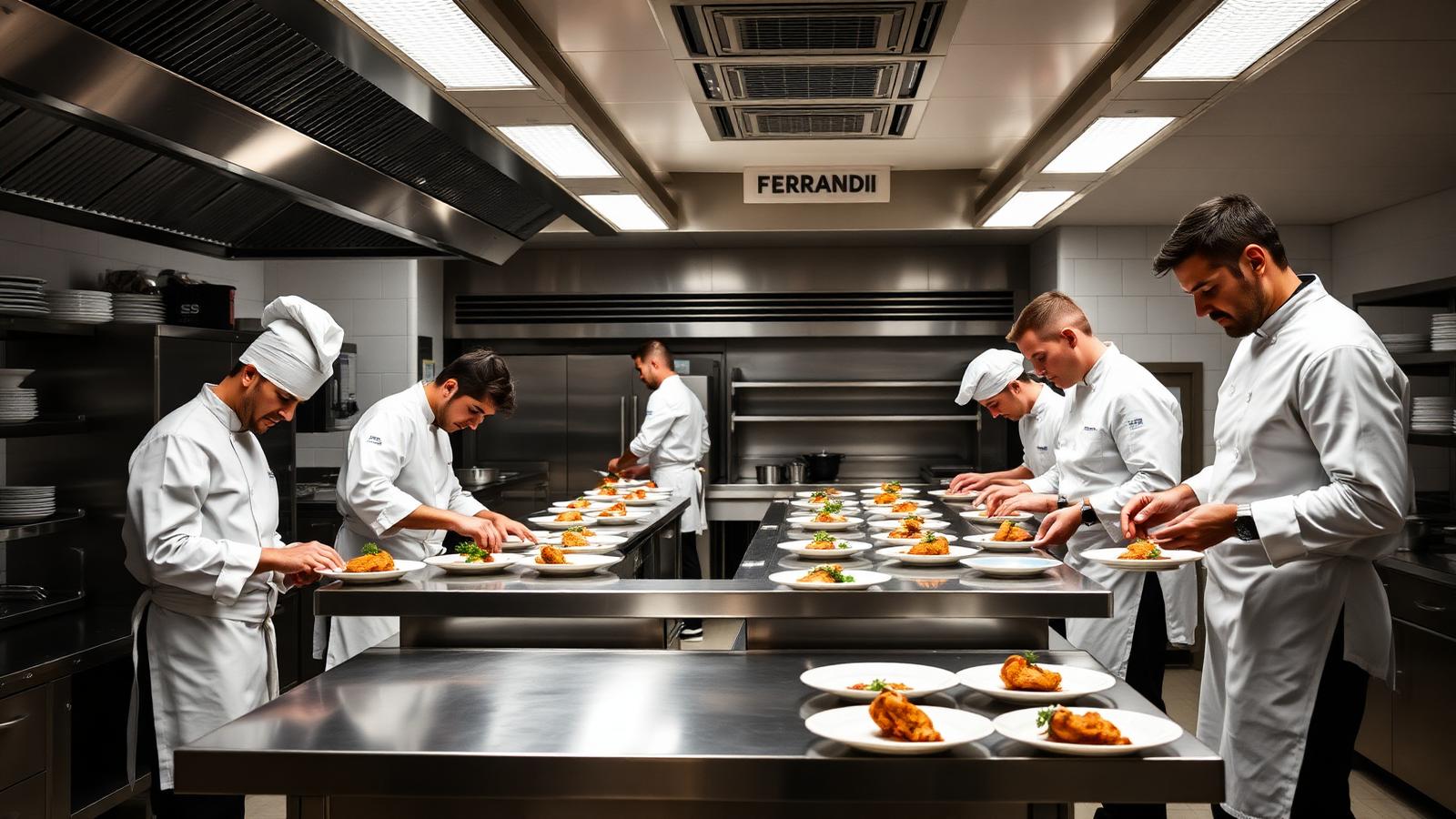
Founded in 1920, FERRANDI Paris has established itself as a premier institution dedicated to the excellence of gastronomy and hotel management. With its roots in Paris, the school has expanded its reach, offering its distinguished programs across multiple campuses, including Bordeaux, Dijon, Rennes, Saint-Gratien, and Strasbourg - Illkirch. This widespread presence underscores its commitment to providing high-quality education in the culinary and hospitality arts throughout France.
FERRANDI Paris offers a comprehensive educational model that blends rigorous academic instruction with practical, hands-on experience. The institution emphasizes a dynamic learning environment, as evidenced by events such as students giving life to their restaurant concepts at the application restaurant Le 28, and masterclasses with renowned chefs. The school also hosts various competitions, including the Concours Olivier Roellinger, the Trophée Marcel Le Servot, and the Kikkoman competition, providing students with opportunities to hone their skills and engage with industry challenges. Furthermore, FERRANDI Paris actively participates in and hosts significant industry events, such as the 75th Prix Culinaire Prosper Montagné, reinforcing its role as a hub for culinary innovation and professional development.
The school's commitment to excellence extends to its industry positioning and student outcomes. FERRANDI Paris regularly celebrates the achievements of its students and alumni, such as those recognized in the Guide MICHELIN. The institution also focuses on contemporary industry trends, offering modules in Hospitality Asset Management and exploring the intersection of innovation and gastronomy at events like VivaTech. With a focus on pedagogical excellence, FERRANDI Paris ensures its educators are well-trained, and its programs, like the Bachelor's, receive renewed state recognition, affirming the quality and relevance of its offerings in the evolving hospitality landscape.
Across all programs, graduates face a hospitality industry mid-way through an AI transition: roughly 31% of entry-level task time is automatable today, while 81% of a graduate's output can be amplified by current AI tools. We break this down per program below.
%20!important%3B%22%2F%3E%0A%20%20%20%20%20%20%20%20%20%20%20%20%20%20%20%20%20%20%20%20%20%20%20%20%20%20%20%20%20%20%20%20%20%20%20%20%3Cpath%20class%3D%22color%22%20data-name%3D%22Trac%C3%A9%2023%22%20d%3D%22M106.905%2029.715a1.431%201.431%200%2011-1.432-1.428%201.432%201.432%200%20011.432%201.428%22%20style%3D%22fill%3A%20rgb(255%2C%20255%2C%20255)%20!important%3B%22%2F%3E%0A%20%20%20%20%20%20%20%20%20%20%20%20%20%20%20%20%20%20%20%20%20%20%20%20%20%20%20%20%20%20%20%20%3C%2Fsvg%3E)