Public · United Kingdom

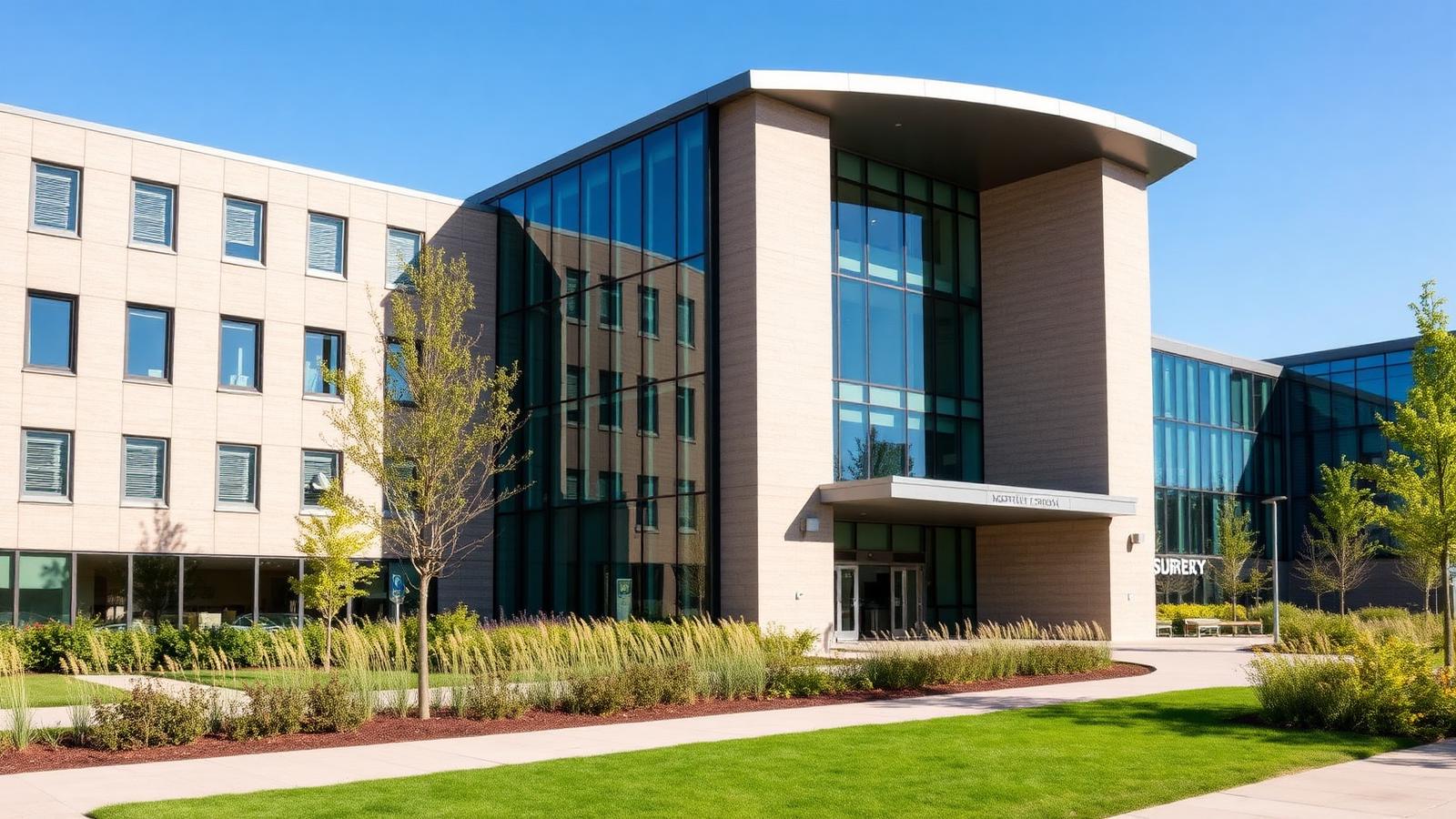
University of Surrey - School of Hospitality & Tourism

Shaping the future of hospitality and tourism through education and research.

Guildford, United Kingdom Est. 1966 · 60 yrs #3 worldwide Official site

Programs

11

across degree levels

Students

1,500

45% international

Acceptance

65%

selective

Tuition (mid)

$31k

full programme

AI-augmentation

81%

upside for grads

The school

What you need to know

Institution type

Public

Accreditation

Faculty ratio

1 : 16

Languages

English

Hospitality rank

#3

AI-readiness

Strong

The University of Surrey's School of Hospitality & Tourism, established in 1966 in Guildford, United Kingdom, stands as a dedicated institution within a global community committed to life-changing education and research. The University of Surrey prides itself on being a hub of ideas and people, fostering a supportive environment that extends to its academic offerings. This foundation supports a focus on positively impacting society and shaping the future digital economy through agile collaboration with businesses, governments, and communities.

While specific details about the School's academic model are not provided, the broader University emphasizes a commitment to both undergraduate and postgraduate study, including taught and research programs. The institution highlights opportunities for practical training and real-world experience across its various disciplines. Students can explore a range of subjects and are encouraged to engage with the University through open days and virtual tours to experience what it has to offer firsthand.

As part of a university that is top-ranked for student experience, the School of Hospitality & Tourism operates within an environment that values student engagement and outcomes. The University of Surrey aims to make academic and professional ambitions a reality for its students, providing a strong research culture and a supportive setting for launching and nurturing careers. The institution also offers various scholarships and studentships to support its diverse student body.

Across all programs, graduates face a hospitality industry mid-way through an AI transition: roughly 35% of entry-level task time is automatable today, while 81% of a graduate's output can be amplified by current AI tools. We break this down per program below.

By the numbers

The data on this school

Application volume — trailing 7 years

Applications received per intake.

Global hospitality rank — trajectory

Lower is better. Movements year-over-year.

Graduate employment, 6mo

95%

Placed via school network

92%

Student–faculty ratio

1 : 16

International student share

45%

11 programs

Programs offered

ProgramLevelDurationTuitionAI exposure
BBA in International Hospitality Management
hospitality management
bachelor36 mo$22,000
62%
MSc in Global Hospitality Leadership
hospitality management
master18 mo$32,000
62%
Grand Diplôme in Culinary Arts
culinary arts
diploma9 mo$22,000
34%
BA (Hons) in Tourism Management
tourism
bachelor
71%
MSc in International Event Management
event management
master
64%
MSc in International Tourism Management
tourism
master
71%
MSc in Sustainable Tourism Management
sustainable tourism
master
55%
MBA in Hospitality & Tourism
hospitality management
mba12 mo$37,000
62%
MBA in Hospitality & Tourism — Leadership Track
hospitality leadership
mba12 mo$37,000
62%
MBA in Hospitality & Tourism — Luxury Track
luxury hospitality
mba12 mo$37,000
62%
MBA in Hospitality & Tourism — Revenue Track
revenue management
mba12 mo$37,000
62%

Programs by degree level

Distribution across credentials.

2026 outlook

AI impact — by program

Every hospitality discipline is being reshaped at a different speed. Below is the AI exposure profile for each program at University of Surrey - School of Hospitality & Tourism, with the specific tasks being automated, the work being amplified, and the tools graduates should be fluent in before they leave.

Automation risk vs augmentation upside

Per program — automation is what AI removes, augmentation is what AI multiplies.

School-wide opportunity score

86/100

Projected salary premium: +20% by yr 5

Augmentation minus automation, normalised 0–100.

bachelor · hospitality management

BBA in International Hospitality Management

Exposure

62%

Automation

38%

Augmentation

78%

BBA in International Hospitality Management at University of Surrey - School of Hospitality & Tourism sits in the moderate-exposure band of the AI-impact curve. Roughly 38% of the entry-level task surface is now automatable, while 78% of a graduate's output can be amplified by AI tools. The net effect: graduates who treat AI as a co-pilot are projected to earn +14% more by year five than peers who don't. High augmentation, low replacement — managers who use AI will out-earn those who don't.

AI is taking over

  • Shift scheduling & forecasting
  • Guest feedback triage and sentiment scoring
  • Routine SOP & training-doc drafting
  • Inventory and par-level recalculations

AI amplifies

  • +Personalised guest journey design
  • +Dynamic upsell and bundling strategy
  • +Owner / asset reporting with AI narrative
  • +AI-led concierge oversight and escalation
ChatGPT EnterpriseCendyn / RevinateDuettoNotion AIGlean

master · hospitality management

MSc in Global Hospitality Leadership

Exposure

62%

Automation

34%

Augmentation

84%

MSc in Global Hospitality Leadership at University of Surrey - School of Hospitality & Tourism sits in the moderate-exposure band of the AI-impact curve. Roughly 34% of the entry-level task surface is now automatable, while 84% of a graduate's output can be amplified by AI tools. The net effect: graduates who treat AI as a co-pilot are projected to earn +22% more by year five than peers who don't. High augmentation, low replacement — managers who use AI will out-earn those who don't.

AI is taking over

  • Shift scheduling & forecasting
  • Guest feedback triage and sentiment scoring
  • Routine SOP & training-doc drafting
  • Inventory and par-level recalculations

AI amplifies

  • +Personalised guest journey design
  • +Dynamic upsell and bundling strategy
  • +Owner / asset reporting with AI narrative
  • +AI-led concierge oversight and escalation
ChatGPT EnterpriseCendyn / RevinateDuettoNotion AIGlean

diploma · culinary arts

Grand Diplôme in Culinary Arts

Exposure

34%

Automation

28%

Augmentation

54%

Grand Diplôme in Culinary Arts at University of Surrey - School of Hospitality & Tourism sits in the low-exposure band of the AI-impact curve. Roughly 28% of the entry-level task surface is now automatable, while 54% of a graduate's output can be amplified by AI tools. The net effect: graduates who treat AI as a co-pilot are projected to earn +6% more by year five than peers who don't. Lowest replacement risk in hospitality — hands stay human, the back-office goes AI.

AI is taking over

  • Recipe scaling and costing
  • Allergen and nutrition label generation
  • Menu translation and localisation
  • Supplier price tracking

AI amplifies

  • +Menu R&D with generative ideation
  • +Plate photography & social content
  • +Wine & beverage pairing copy
ChatGPTMidjourneyMarginEdgeApicbaseNotion AI

Exposure

71%

Automation

52%

Augmentation

74%

BA (Hons) in Tourism Management at University of Surrey - School of Hospitality & Tourism sits in the high-exposure band of the AI-impact curve. Roughly 52% of the entry-level task surface is now automatable, while 74% of a graduate's output can be amplified by AI tools. The net effect: graduates who treat AI as a co-pilot are projected to earn +8% more by year five than peers who don't. Highest exposure in the discipline — traditional agency work is being rewritten end-to-end.

AI is taking over

  • Itinerary generation
  • Booking & ticketing flows
  • FAQ and customer-support handling
  • Translation across channels

AI amplifies

  • +Destination marketing with generative video
  • +Experience design and storytelling
  • +B2B trade & MICE intelligence
MindtripLaylaAmadeus CytricChatGPTSora

master · event management

MSc in International Event Management

Exposure

64%

Automation

42%

Augmentation

81%

MSc in International Event Management at University of Surrey - School of Hospitality & Tourism sits in the moderate-exposure band of the AI-impact curve. Roughly 42% of the entry-level task surface is now automatable, while 81% of a graduate's output can be amplified by AI tools. The net effect: graduates who treat AI as a co-pilot are projected to earn +18% more by year five than peers who don't. Production work is being absorbed — strategy and on-site judgement command a premium.

AI is taking over

  • RSVP & guest-list management
  • Run-of-show & briefing drafts
  • Vendor RFP comparison
  • Post-event reporting

AI amplifies

  • +Hybrid-event design
  • +Sponsorship analytics
  • +Real-time attendee personalisation
CventBizzaboHopinChatGPTCanva AI

Exposure

71%

Automation

48%

Augmentation

80%

MSc in International Tourism Management at University of Surrey - School of Hospitality & Tourism sits in the high-exposure band of the AI-impact curve. Roughly 48% of the entry-level task surface is now automatable, while 80% of a graduate's output can be amplified by AI tools. The net effect: graduates who treat AI as a co-pilot are projected to earn +15% more by year five than peers who don't. Highest exposure in the discipline — traditional agency work is being rewritten end-to-end.

AI is taking over

  • Itinerary generation
  • Booking & ticketing flows
  • FAQ and customer-support handling
  • Translation across channels

AI amplifies

  • +Destination marketing with generative video
  • +Experience design and storytelling
  • +B2B trade & MICE intelligence
MindtripLaylaAmadeus CytricChatGPTSora

master · sustainable tourism

MSc in Sustainable Tourism Management

Exposure

55%

Automation

26%

Augmentation

86%

MSc in Sustainable Tourism Management at University of Surrey - School of Hospitality & Tourism sits in the moderate-exposure band of the AI-impact curve. Roughly 26% of the entry-level task surface is now automatable, while 86% of a graduate's output can be amplified by AI tools. The net effect: graduates who treat AI as a co-pilot are projected to earn +25% more by year five than peers who don't. AI is a force-multiplier for impact measurement — strong tailwind for graduates.

AI is taking over

  • Carbon accounting
  • Compliance reporting
  • Survey analysis

AI amplifies

  • +Regenerative-tourism strategy
  • +Community-impact storytelling
  • +Funding & grant applications
SustainalyticsGreenViewChatGPTGoogle Earth Engine

mba · hospitality management

MBA in Hospitality & Tourism

Exposure

62%

Automation

30%

Augmentation

88%

MBA in Hospitality & Tourism at University of Surrey - School of Hospitality & Tourism sits in the moderate-exposure band of the AI-impact curve. Roughly 30% of the entry-level task surface is now automatable, while 88% of a graduate's output can be amplified by AI tools. The net effect: graduates who treat AI as a co-pilot are projected to earn +28% more by year five than peers who don't. High augmentation, low replacement — managers who use AI will out-earn those who don't.

AI is taking over

  • Shift scheduling & forecasting
  • Guest feedback triage and sentiment scoring
  • Routine SOP & training-doc drafting
  • Inventory and par-level recalculations

AI amplifies

  • +Personalised guest journey design
  • +Dynamic upsell and bundling strategy
  • +Owner / asset reporting with AI narrative
  • +AI-led concierge oversight and escalation
ChatGPT EnterpriseCendyn / RevinateDuettoNotion AIGlean

Investment

Tuition vs. peer schools

United Kingdom hospitality schools — mid tuition

Mid-point of published tuition ranges, in USD.

Min tuition

$29,736

Max tuition

$32,000

Country mid

$28,311

Head-to-head

Compare with similar schools